Healing of Digory's mother
The Magician's NephewThe healing of Digory’s mother is the emotional resolution of Digory’s quest for the silver apple: after rejecting Jadis’s attempt to turn the fruit into a means of escape, he returns with Aslan’s gift and gives it to his mother. The apple brings not stolen immortality but healing, and its effects reach beyond her bedside, gradually renewing the life of the household.
Aslan’s assurance and Digory’s choice
Aslan distinguishes the apple Digory might have stolen from the one he is now permitted to take. A stolen apple would have healed Digory’s mother, but Aslan warns that the apparent rescue would eventually have brought grief to both mother and son. Digory is overcome by tears and relinquishes his hope of saving her through theft. Aslan then makes the decisive difference plain: the apple he gives will bring joy; it will heal, though in Digory’s world it will not grant endless life. Digory is directed to pluck an apple from the Tree.
For a moment Digory can scarcely comprehend the reversal. He crosses to the Tree as if in a dream while the King and Queen and the creatures cheer him on. He plucks the fruit, puts it in his pocket, and returns to Aslan. In asking to go home, he forgets to say thank you, though he means it and Aslan understands. The scene turns the fruit from a temptation into a gift: the healing is made possible not by taking what Digory desires for himself, but by accepting the conditions of a freely given remedy.
Bringing the apple to his mother
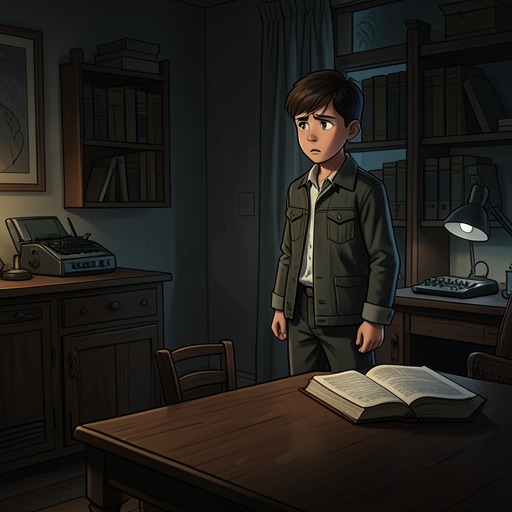
At home, Digory asks Polly to retrieve the other rings because he wants to go to his mother. After catching his breath, he enters her room quietly. She lies propped on pillows, pale and wan, as he has seen her so many times before. He takes the Apple of Life from his pocket, bringing into that familiar sickroom the fruit he has carried back from the mountain garden.
The apple changes the room’s appearance. Against its brightness, the coloured bed-covering, wallpaper, sunlight, and his mother’s pale-blue dressing jacket seem faded and dingy; its light throws strange reflections on the ceiling, and its scent seems to open a window on Heaven. His mother calls it lovely. Digory asks her to eat it, while she hesitates over what the doctor might say, then admits that she almost feels able to. The moment joins the extraordinary fruit to the ordinary uncertainty of illness: Digory can offer it, but his mother must choose to take it.
Digory peels the apple, cuts it up, and feeds it to her piece by piece. As soon as she has finished, she smiles and sinks back into sleep. It is a real, natural, gentle sleep, without the drugs she dislikes and, as Digory knows, the thing she wanted most. He thinks her face already looks a little different. He kisses her softly and leaves with the apple core, his heart beating; throughout the rest of the day, the unmagical appearance of ordinary things makes him afraid to hope, but remembering Aslan gives him hope again.
Recovery and a changed household
That evening Digory buries the apple core in the back garden. The cure is not presented as an instant restoration: about a week later it is certain that his mother is getting better; about a fortnight after the burial she can sit in the garden. By a month, the entire house has become different. The change in her health is accompanied by a change in daily life, as Aunt Letty does the things his mother likes, windows are opened, the frowsy curtains drawn back, flowers brought into the rooms, better food provided, and the old piano tuned. Digory’s mother takes up singing again and plays games with Digory and Polly; Aunt Letty jokes that she is the biggest baby of the three.
The apple’s consequence thus extends from the patient to the household. The renewed rooms and resumed music give visible and audible form to a recovery that has been measured in weeks, not simply declared in a single miraculous instant. The narrative also sets this improvement against the prolonged decline that preceded it: when things go wrong they may keep worsening, but once they begin to go right they can continue improving.
The healing’s aftermath
After about six weeks of this happier life, news arrives in a long letter from Digory’s father in India. Great-Uncle Kirk has died, leaving Digory’s father apparently very rich; he plans to retire and return home permanently. The family will live in the country house Digory has heard about all his life but never seen, with its armour, stables, kennels, river, park, hot-houses, vineries, woods, and mountains behind it. His mother’s recovery is therefore part of a wider change in the family’s prospects, though the two developments arrive on different timetables: the fruit begins its work first, and the letter brings further good news later.
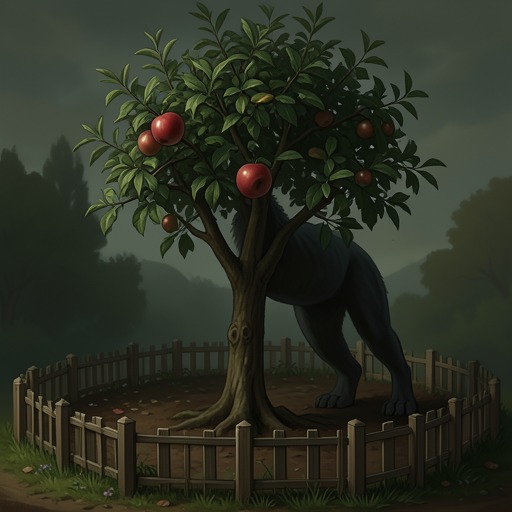
The apple’s core also links the private cure to the story’s other consequences. The next day, when Digory and Polly go to the marked place in the garden, something is already growing above ground. They bury the magic rings in a circle around it. The seed left over from the apple brought home for Digory’s mother becomes the beginning of a new tree, while the rings are put away around its growth. The healing therefore leaves a living trace beyond the sickroom, connecting the family’s renewed life to the later history of the apple’s tree.
Digory and Polly remain great friends, and Polly comes nearly every holiday to stay with the family in their beautiful country home, where she learns to ride, swim, milk, bake, and climb. The ending completes the healing on several scales: Digory’s mother sleeps naturally and recovers her strength; the household regains music and shared play; and the family enters a new home and future. The contrast with the stolen fruit is central to the episode’s meaning. The same kind of apple could have been used to impose a cure at a terrible cost, but the fruit Aslan gives heals without the doom attached to theft.